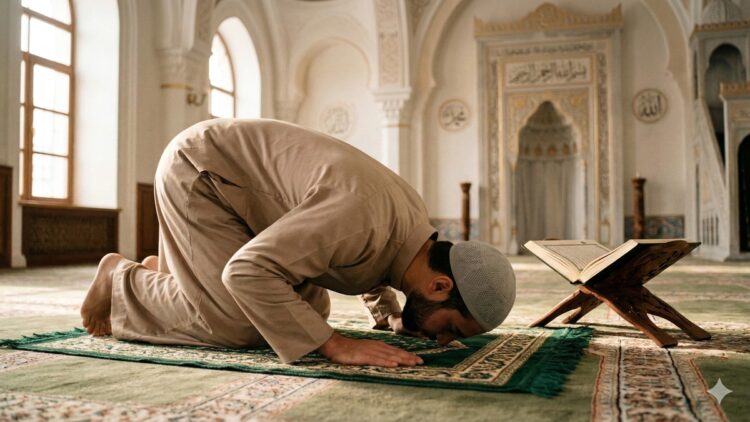
Sajdah al‑Tilāwah is a special prostration performed when a Muslim recites or hears specific verses of the Qur’an that call for humility, submission, or direct prostration to Allah. These moments pause the recitation and transform it into an embodied act of devotion, mirroring the submission described in the verse itself.
The practice of prostrating upon reciting these verses is well‑established in the Sunnah. The Prophet ﷺ said:
“When the son of Adam recites a verse of prostration and then prostrates, Shayṭān withdraws weeping, saying: ‘Woe to me! The son of Adam was commanded to prostrate and he prostrated—so Paradise is his. I was commanded to prostrate and I disobeyed—so the Fire is mine.’”
(Ṣaḥīḥ Muslim)In another narration, ‘Amr ibn al‑‘Āṣ (RA), said:
“The Messenger of Allah (ﷺ) recited to me fifteen verses in the Qur’an where one should prostrate — three of which are in al‑Mufassal and two in Sūrat al‑Ḥajj.”
This narration is reported by Abu Dāwūd, Ibn Mājah, al‑Ḥākim, and al‑Dāraqutni, and has been graded ḥasan by al‑Mundhirī and Imām al‑Nawawī.
Another profound hadith highlights the spiritual power of Sajdah al‑Tilāwah and its effect on Shayṭān.
These hadiths show that this prostration is not merely symbolic, but where obedience overcomes arrogance, just as the believers obeyed while Shayṭān refused.
What is Sajdah al‑Tilāwah?
Sajdah al‑Tilāwah is a single prostration performed when encountering any of the Āyāt al‑Sajdah, the Qur’anic verses that explicitly mention prostration or describe the humility of believers before Allah.
The Purpose of the Prostration
The prostration serves several spiritual aims:
- Humility: Lowering your head to the ground when Allah commands prostration.
- Embodied obedience: Physically responding to a Qur’anic instruction.
- Spiritual purification: Shayṭān despises this prostration because it represents submission and sincerity.
- Connection with prophetic practice: The Prophet ﷺ always prostrated when reciting these verses, unless he intended to show permissibility in omission.
Is Sajda‑e‑Tilāwah Obligatory?
| Madhhab | Ruling | Reasoning |
|---|---|---|
| Hanafī | Wājib (Obligatory) | Based on imperative commands such as “they do not prostrate?” (84:21). |
| Shāfi‘ī, Mālikī, Hanbalī | Sunnah (Recommended) | Based on ‘Umar (RA) sometimes omitting the sajdah to show it is not fard. |
How to Identify Sajdah Verses in the Qur’an
In most printed muṣḥafs, Sajdah verses are marked with the special symbol ۩. Some Qur’ans also include a margin note such as “Sajdah” or “Ayat al‑Sajdah”.
Different schools of thought recognise a different number of Sajdah verses:
- Hanafī: 14 verses
- Shāfi‘ī: 15 verses
- Hanbalī: 14 verses
- Mālikī: 11 verses only
Table of Sajdah Tilāwah by School
| # | Surah | Ayah | Hanafī | Shāfiʿī | Mālikī | Hanbalī |
|---|---|---|---|---|---|---|
| 1 | Al‑Aʿrāf | 7:206 | ✔️ | ✔️ | ✔️ | ✔️ |
| 2 | Ar‑Raʿd | 13:15 | ✔️ | ✔️ | ✔️ | ✔️ |
| 3 | An‑Naḥl | 16:50 | ✔️ | ✔️ | ✔️ | ✔️ |
| 4 | Al‑Isrā’ | 17:109 | ✔️ | ✔️ | ✔️ | ✔️ |
| 5 | Maryam | 19:58 | ✔️ | ✔️ | ✔️ | ✔️ |
| 6 | Al‑Ḥajj | 22:18 | ✔️ | ✔️ | ✔️ | ✔️ |
| 7 | Al‑Ḥajj | 22:77 | ❌ | ✔️ | ❌ | ❌ |
| 8 | Al‑Furqān | 25:60 | ✔️ | ✔️ | ✔️ | ✔️ |
| 9 | An‑Naml | 27:26 | ✔️ | ✔️ | ✔️ | ✔️ |
| 10 | As‑Sajdah | 32:15 | ✔️ | ✔️ | ✔️ | ✔️ |
| 11 | Ṣād | 38:24 | ✔️ | ✔️ | ✔️ | ✔️ |
| 12 | Fuṣṣilat | 41:38 | ✔️ | ✔️ | ✔️ | ✔️ |
| 13 | An‑Najm | 53:62 | ✔️ | ✔️ | ❌ | ✔️ |
| 14 | Al‑Inshiqāq | 84:21 | ✔️ | ✔️ | ❌ | ✔️ |
| 15 | Al‑ʿAlaq | 96:19 | ✔️ | ✔️ | ❌ | ✔️ |
List of the Sajdah Verses (Arabic + English)
1. Surah Al‑A‘rāf 7:206
Arabic:
إِنَّ الَّذِينَ عِندَ رَبِّكَ لَا يَسْتَكْبِرُونَ عَنْ عِبَادَتِهِ وَيُسَبِّحُونَهُ وَلَهُ يَسْجُدُونَ
English (Sahih International):
“Indeed, those who are near your Lord are not prevented by arrogance from His worship, and they exalt Him, and to Him they prostrate.”
2. Surah Ar‑Ra‘d 13:15
Arabic:
وَلِلَّهِ يَسْجُدُ مَن فِي السَّمَاوَاتِ وَالْأَرْضِ…
English:
“And to Allah prostrates whoever is within the heavens and the earth…”
3. Surah An‑Naḥl 16:50
Arabic:
يَخَافُونَ رَبَّهُم مِّن فَوْقِهِمْ وَيَفْعَلُونَ مَا يُؤْمَرُونَ
English:
“They fear their Lord above them, and they do what they are commanded.”
4. Surah Al‑Isrā’ 17:109
Arabic:
وَيَخِرُّونَ لِلْأَذْقَانِ يَبْكُونَ…
English:
“And they fall upon their faces weeping, and the Qur’an increases them in humble submission.”
5. Surah Maryam 19:58
Arabic:
إِذَا تُتْلَىٰ عَلَيْهِمْ آيَاتُ الرَّحْمَـٰنِ خَرُّوا سُجَّدًا وَبُكِيًّا
English:
“When the verses of the Most Merciful were recited to them, they fell in prostration and weeping.”
6. Surah Al‑Ḥajj 22:18
Arabic:
أَلَمْ تَرَ أَنَّ اللَّهَ يَسْجُدُ لَهُ مَن فِي السَّمَاوَاتِ…
English:
“Do you not see that to Allah prostrates whoever is in the heavens and whoever is on the earth…”
7. Surah Al‑Ḥajj 22:77
(Shafi‘i include this as an extra sajdah)
Arabic:
يَا أَيُّهَا الَّذِينَ آمَنُوا ارْكَعُوا وَاسْجُدُوا…
English:
“O you who have believed, bow and prostrate and worship your Lord…”
8. Surah Al‑Furqān 25:60
Arabic:
وَإِذَا قِيلَ لَهُمُ اسْجُدُوا لِلرَّحْمَـٰنِ…
English:
“And when it is said to them, ‘Prostrate to the Most Merciful,’ they say, ‘And what is the Most Merciful?’…”
9. Surah An‑Naml 27:26
Arabic:
اللَّهُ لَا إِلَـٰهَ إِلَّا هُوَ رَبُّ الْعَرْشِ الْعَظِيمِ
English:
“Allah—there is no deity except Him, Lord of the Great Throne.”
10. Surah As‑Sajdah 32:15
Arabic:
إِنَّمَا يُؤْمِنُ بِآيَاتِنَا الَّذِينَ إِذَا ذُكِّرُوا بِهَا خَرُّوا سُجَّدًا…
English:
“Only those believe in Our verses who, when they are reminded by them, fall in prostration…”
11. Surah Ṣād 38:24
Arabic:
وَظَنَّ دَاوُودُ أَنَّمَا فَتَنَّاهُ…
English:
“And David became certain that We had tested him, and he sought forgiveness…”
12. Surah Fuṣṣilat 41:38
Arabic:
فَإِنِ اسْتَكْبَرُوا فَالَّذِينَ عِندَ رَبِّكَ يُسَبِّحُونَ لَهُ…
English:
“But if they are arrogant—then those who are near your Lord exalt Him day and night…”
13. Surah An‑Najm 53:62
Arabic:
فَاسْجُدُوا لِلَّهِ وَاعْبُدُوا
English:
“So prostrate to Allah and worship Him.”
14. Surah Al‑Inshiqāq 84:21
Arabic:
وَإِذَا قُرِئَ عَلَيْهِمُ الْقُرْآنُ لَا يَسْجُدُونَ
English:
“And when the Qur’an is recited to them, they do not prostrate?”
15. Surah Al‑‘Alaq 96:19
Arabic:
كَلَّا لَا تُطِعْهُ وَاسْجُدْ وَاقْتَرِب
English:
“No! Do not obey him. But prostrate and draw near [to Allah].”
How to Perform Sajdah Tilāwah
1. Ensure You Have Wuḍū – Sujūd Tilāwah requires the same purity as prayer.
2. Stand facing the Qiblah (you can sit too)
3. Say “Allāhu Akbar” without raising your hands
4. Move directly into prostration.
5. Recite the Recommended Dua
Either as per Salah, ‘Subhaana Rabbiyal A’ala’ three times
OR
سَجَـدَ وَجْهـي للَّـذي خَلَقَـهُ وَشَقَّ سَمْـعَـهُ وَبَصَـرَهُ بِحَـوْلِـهِ وَقُـوَّتِهِ ﴿فتَبـارَكَ اللهُ أَحْسَـنُ الخـالِقيـن﴾.
I have prostrated my face to the One Who created it, and gave it hearing and sight by His might and His power. Glory is to Allah, the Best of creators.
OR
اللّهُـمَّ اكْتُـبْ لي بِهـا عِنْـدَكَ أَجْـراً وَضَـعْ عَنِّـي بِهـا وِزْراً وَاجْعَـلها لي عِنْـدَكَ ذُخْـراً وَتَقَبَّـلها مِنِّي كَمَا تَقَبَّلْتَهَا مِنْ عَبْدِكَ دَاوُدَ
O Allah, write it as a reward for me, and release me from a burden for it, and make it a treasure for me with You. Accept it from me as You accepted it from your servant Dawud.
6. Rise from Sajdah and say “Allāhu Akbar” as you rise. No taslīm is required.
Times When Sajdah Tilāwah is Prohibited
Sajdah al‑Tilāwah should not be performed:
- During sunrise
- Exactly at midday (when the sun is at its zenith)
- Before sunset when the sun becomes yellowish until it fully sets
These are the same timings in which voluntary prayers are disliked.