This series will cover the history of Modern Pakistan, from the earliest notions of a separatist Muslim governance to the creation of Pakistan and all the way to 2023.
You can read post covering 1857 – 1927 here: A History of Modern Pakistan #1 1857 – 1927
You can read post covering 1927- 1939 here: A History of Modern Pakistan #2 1927 – 1939
You can read post covering 1939 – 1947 here: A History of Modern Pakistan #3 1939 – 1947
You can read post covering 1947 – 1953 here: A History of Modern Pakistan #4 1947 – 1953
You can read post covering 1953 – 1958 here: A History of Modern Pakistan #5 1953 – 1958
You can read post covering 1958 – 1970 here: A History of Modern Pakistan #6 1958 – 1970
You can read post covering 1970 – 1977 here: A History of Modern Pakistan #7 1970 – 19770
You can read post covering 1977 – 1988 here: A History of Modern Pakistan #8 1977 – 1988
1988 General Elections
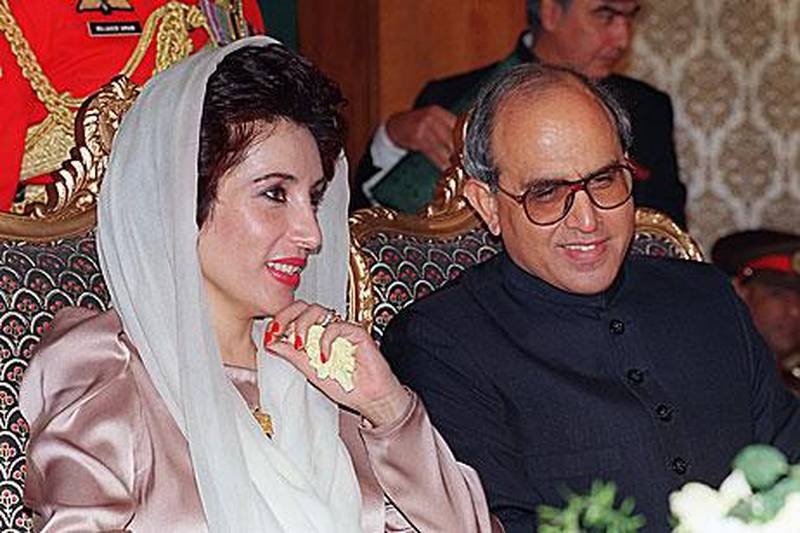
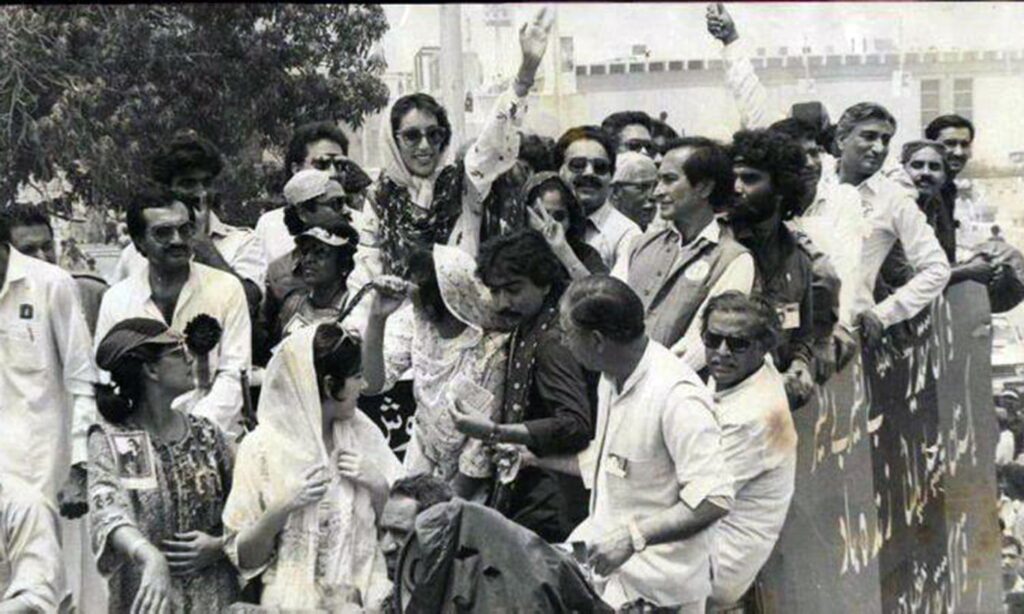
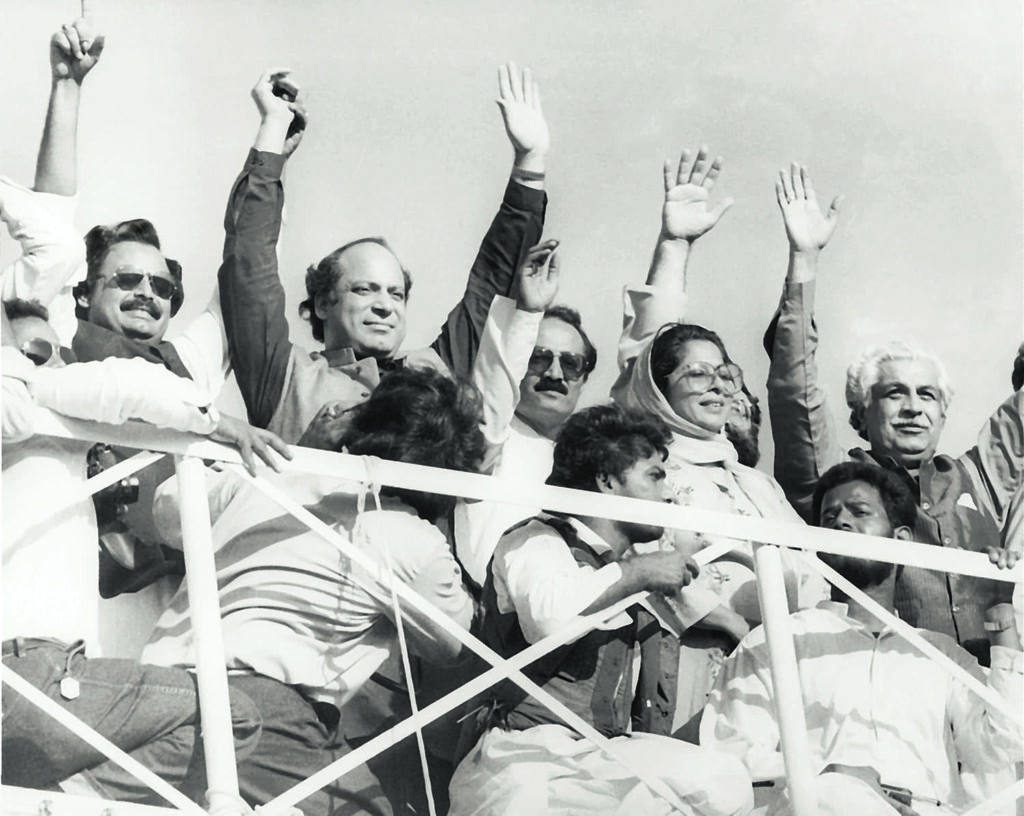
After the death of General Zia-ul-Haq, Pakistan returned to elections in 1988. The political battle was essentially between two sides: the Pakistan Peoples Party (PPP), led by Bhutto’s daughter Benazir Bhutto, representing the left, and the Islami Jamhoori Ittehad (IJI), a nine-party alliance made up largely of pro-Zia and right-wing parties.
The IJI was led by Nawaz Sharif and Ghulam Mustafa Jatoi, while Benazir had inherited the political legacy of her father.
The election did not produce an outright majority, but the PPP emerged as the largest party, winning 94 of the 207 seats. Benazir therefore formed a coalition with other parties and became Prime Minister of Pakistan.
This was a historic moment.
Benazir Bhutto became the first woman to lead a Muslim-majority country as Prime Minister.
However, the PPP did not control the whole country. The IJI performed strongly in the provincial elections, particularly in Punjab, where Nawaz Sharif became Chief Minister.
This created an interesting political situation. Benazir controlled the federal government, but Nawaz Sharif controlled Punjab — the country’s most populous province, containing around 60% of Pakistan’s population.
The battle between the two would dominate Pakistani politics for years to come.
Ghulam Ishaq Khan as President
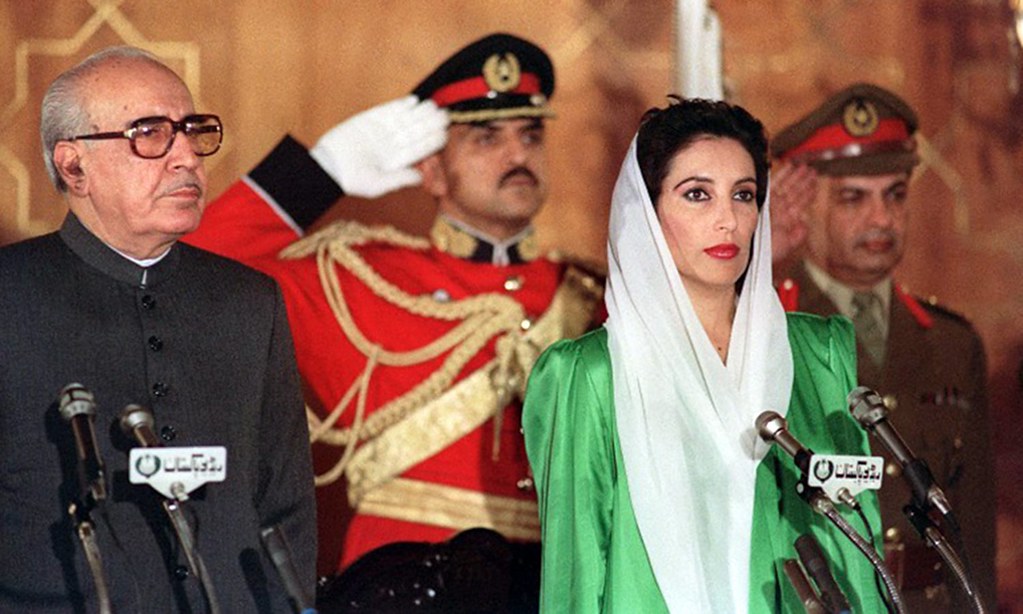
Presidential elections were also held in 1988, and Ghulam Ishaq Khan, commonly known as GIK, became President.
He was an experienced bureaucrat and one of the most powerful figures in the Pakistani establishment. More importantly, he inherited the Eighth Amendment, which gave the President enormous powers over the elected government.
This immediately created tension with Benazir Bhutto.
Benazir wanted to restore the authority of Parliament and reverse the constitutional changes introduced during the Zia era. GIK, however, was not willing to surrender the powers of the presidency.
There was another major issue: Pakistan’s nuclear programme.
Benazir wanted Pakistan to continue developing its nuclear capabilities, particularly because of India’s nuclear ambitions. GIK was equally determined that Pakistan should retain control over the programme.
The United States was becoming increasingly concerned about Pakistan’s nuclear development. Under the Pressler Amendment, American economic and military assistance could be suspended unless the US President certified that Pakistan did not possess a nuclear explosive device.
Pakistan was therefore entering a difficult position: it needed American support, but it also believed that nuclear weapons were essential for its security against India.
GIK refused to simply abandon the nuclear programme.
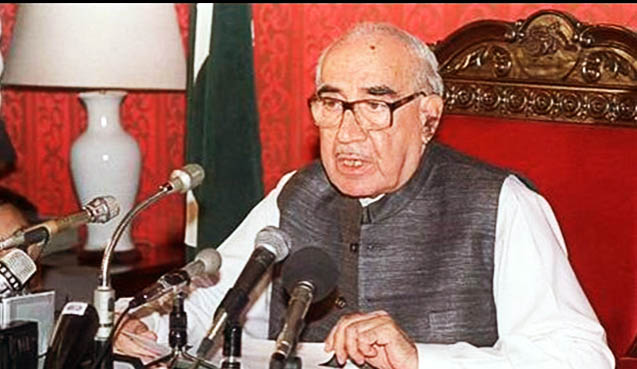
Bhutto as Prime Minister
Benazir entered office promising to improve the lives of ordinary Pakistanis.
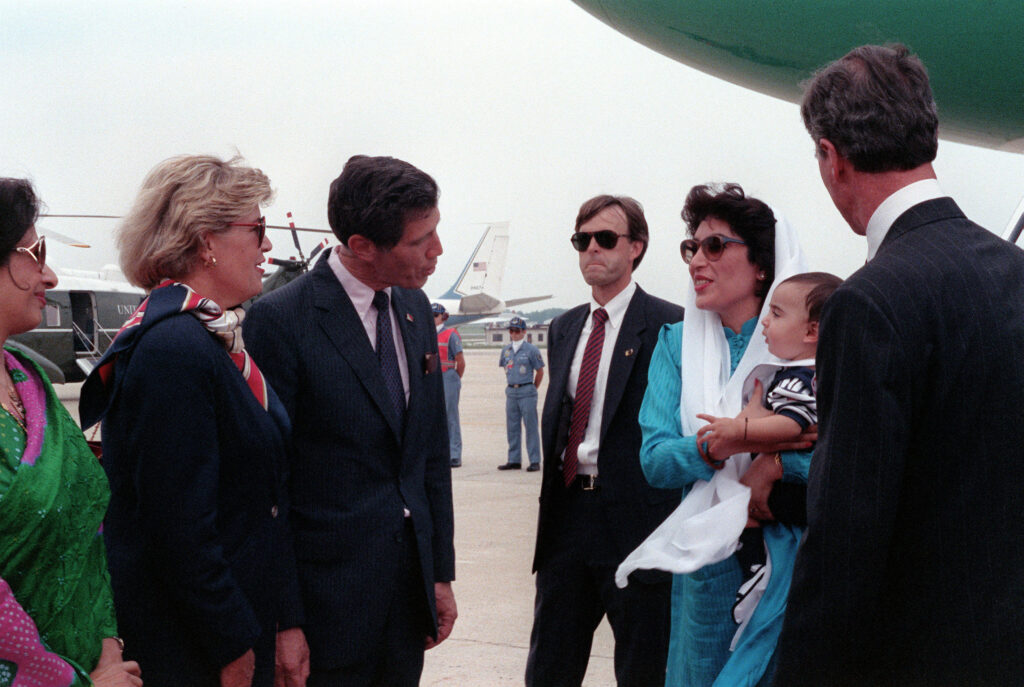
She used her position as the first female Prime Minister of a Muslim-majority country to build international relationships and attract investment and foreign aid. She travelled extensively across the West, Middle East and Far East, presenting Pakistan as a modern democratic state returning to the international community after years of military rule.
She also attempted to improve relations with India, although she remained firm on the Kashmir issue.
Domestically, one of her main objectives was to restore democracy after Zia’s military government.
She therefore lifted restrictions on the media, trade unions, NGOs and student associations and began dismantling the National Press Trust, a government-linked conglomerate controlling more than a dozen newspapers.
But Benazir quickly discovered that winning an election did not mean that she controlled Pakistan.
The government she inherited was in serious financial difficulty. Zia had borrowed heavily, often at high interest rates, leaving the new government with limited money to fulfil its promises.
Benazir had promised ambitious programmes, including one million new homes each year, universal free education and universal healthcare. But with unemployment rising and government finances already under pressure, these promises were extremely difficult to deliver.
Her popularity therefore began to collide with the economic reality of governing.
Benazir and the Military
Perhaps more importantly, Benazir did not have complete control over Pakistan’s security establishment.
The President, military and ISI continued to exercise enormous influence over defence and foreign policy, particularly the nuclear programme.
Benazir increasingly felt that she was being treated as the democratic face of Pakistan rather than the person actually making all of its major decisions.
During a visit to the United States, she publicly stated that Pakistan did not possess — and did not intend to develop — a nuclear weapon. She was then shown intelligence and mock-up images demonstrating how far Pakistan’s nuclear programme had progressed.
She was shocked.
She had been Prime Minister, yet she had not been fully informed about one of the most important strategic programmes in the country.
She demanded greater involvement, but remained cautious about openly confronting the United States.
Benazir and the Military
Perhaps more importantly, Benazir did not have complete control over Pakistan’s security establishment.
The President, military and ISI continued to exercise enormous influence over defence and foreign policy, particularly the nuclear programme.
Benazir increasingly felt that she was being treated as the democratic face of Pakistan rather than the person actually making all of its major decisions.
During a visit to the United States, she publicly stated that Pakistan did not possess — and did not intend to develop — a nuclear weapon. She was then shown intelligence and mock-up images demonstrating how far Pakistan’s nuclear programme had progressed.
She was shocked.
She had been Prime Minister, yet she had not been fully informed about one of the most important strategic programmes in the country.
She demanded greater involvement, but remained cautious about openly confronting the United States.
Pak Afghan War Jalalabad 1989
The Soviet withdrawal from Afghanistan did not mean that the problems created by the war disappeared.
Pakistan had become deeply involved in the Afghan conflict, and the country was now facing another consequence: the drug trade.
Large quantities of heroin were being transported through the region, and Pakistan became a major transit route. This created a serious domestic drug problem, with heroin addiction spreading within Pakistani society.
At the same time, Pakistan’s relationship with the United States was changing.
The Soviet Union was gone from Afghanistan, so Pakistan was no longer as strategically important to Washington. The American alliance that had brought Pakistan enormous military and economic assistance during the 1980s was beginning to weaken.
And then Pakistan’s nuclear programme became increasingly difficult for the Americans to ignore.
In 1989, the Pakistani intelligence establishment became involved in an attempt to capture Jalalabad in Afghanistan.
The operation was led by the ISI and aimed to establish a friendly Afghan government after the Soviet withdrawal.
The operation failed.
The failure created serious tensions between Benazir’s government and the military establishment. The ISI leadership accused the government of leaking information about the operation to the Afghans.
Benazir, meanwhile, could not simply remove the powerful ISI leadership.
The episode demonstrated an important reality of Pakistani politics:
The elected government might control the country constitutionally, but the military and intelligence establishment still possessed enormous independent power.
Benazir eventually replaced the army chief, but the underlying struggle between civilian government and the military remained.
Dismissal
In April 1989, opposition parties attempted to remove Benazir through a vote of no confidence.
The government survived — but only by twelve votes.
Benazir claimed that several opposition politicians had been bribed to vote against her.
The political situation continued to deteriorate. Pakistan’s economy was struggling, relations with the United States were deteriorating because of the nuclear programme, and foreign aid and investment were declining.
The country entered a period of stagflation, combining economic stagnation with rising prices.
Eventually, President Ghulam Ishaq Khan dismissed Benazir’s government, accusing it of corruption and misuse of power, and called fresh elections.
Benazir was out of office.
But she was not finished.
1990 General Elections
The 1990 election became another contest between Benazir Bhutto and Nawaz Sharif.
Benazir remained highly popular, and initially appeared to be ahead in the polls. Yet the election ultimately produced an IJI victory, and Nawaz Sharif became Prime Minister.
Benazir claimed that the election had been rigged.
Years later, the controversy became even more significant when the Supreme Court ruled in 2012 that the 1990 election had indeed been manipulated, with the military intelligence establishment having played a role in influencing the political process.
The country now entered another chapter, this time under Nawaz Sharif.
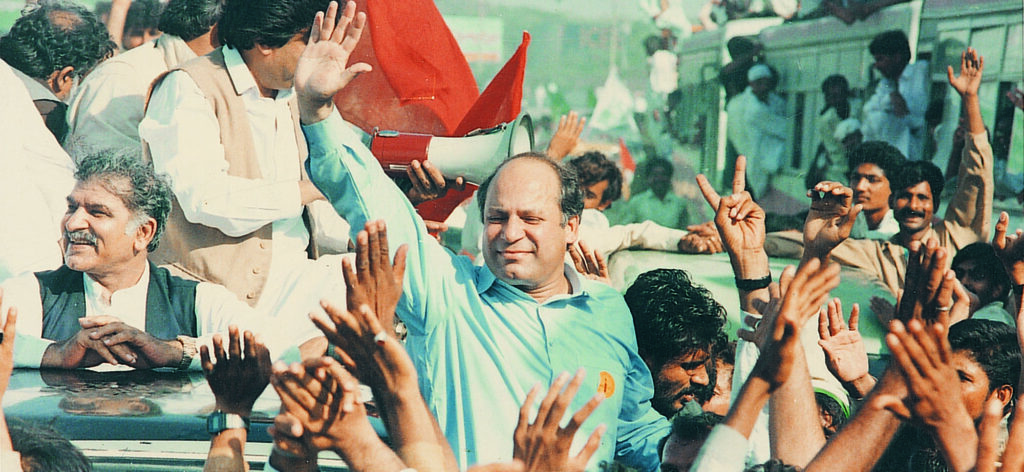
Nawaz Sharif as Prime Minister
Nawaz Sharif came from a business background, and his economic philosophy was almost the opposite of Bhutto’s.
Where Bhutto had nationalised industries, Sharif believed that Pakistan needed privatisation, competition and economic liberalisation.
His argument was simple: Pakistan was a developing country and needed private businesses to grow, invest and create employment. Excessive taxation and government control would discourage investment.
Initially, these policies produced economic growth.
But there was a downside.
As businesses expanded, a wealthy class of industrialists and businessmen became increasingly powerful. The gap between rich and poor also widened.
Sharif also remained influenced by the Islamic political tradition of the Zia era. His government established institutions aimed at promoting Shariah law and created Bait-ul-Mal, intended to support the poor, orphans and widows.
But political tensions soon returned.
Punjab, under Sharif’s influence, was experiencing greater economic development, while Sindh remained comparatively stagnant. This fed an increasingly obvious regional and political divide.
Sharif was a Punjabi politician.
Bhutto was a Sindhi politician.
The political struggle was therefore becoming about more than just two individuals. Regional identity was becoming increasingly important.
Resignations
Another thing Sharif tried to overturn was the eighth amendment as he knew it was always hanging over his head. GIK wasn’t going to allow such request to go ahead. He would lose vital power against the acting government, and by extension so would the military. GIK removed Sharif from power. Sharif retaliated with a lawsuit and the Supreme Court of Pakistan ruled in his favour, the use of the eighth amendment was illegal, and Sharif was reinstated as the Prime Minister.
The turmoil in governance between the Prime Minister and President led them both to resign after joint intervention by the judiciary and the military. The military formed an interim government and called for a general election to held in October 1993.
The Eighth Amendment Crisis
Nawaz Sharif knew that the Eighth Amendment was a threat to his government.
The amendment gave the President the power to dismiss an elected government and dissolve Parliament. Sharif therefore attempted to remove or weaken these presidential powers.
Ghulam Ishaq Khan strongly opposed him.
The conflict eventually became so serious that GIK dismissed Sharif from office.
But Sharif fought back.
He challenged the dismissal in the Supreme Court of Pakistan, which ruled in his favour and ordered that he be restored as Prime Minister.
Sharif returned to office.
But the political crisis did not disappear.
The President and Prime Minister were now openly fighting each other, while the military remained the ultimate power capable of resolving the dispute.
Eventually, both Nawaz Sharif and Ghulam Ishaq Khan resigned following intervention from the judiciary and military leadership.
An interim government was established and fresh elections were called for 1993.
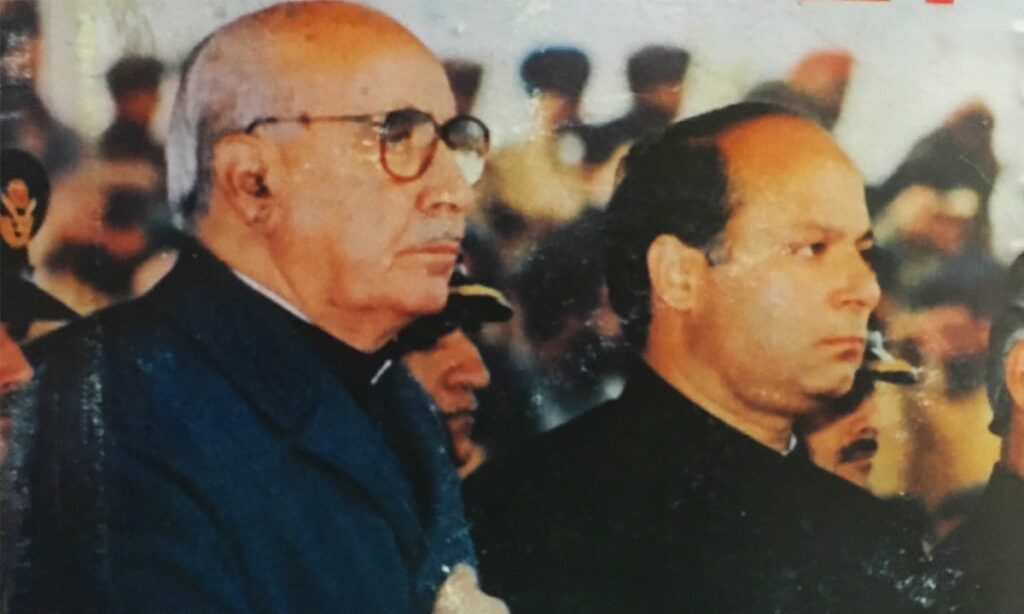
1993 General Elections
The 1993 elections once again became a contest between Benazir Bhutto and Nawaz Sharif.
Their political programmes had become increasingly similar, but the rivalry between the two remained intense.
Benazir faced another particular difficulty: she was a woman attempting to lead a deeply conservative political society, and there were continual attempts to undermine her authority.
During the election campaign, there were also at least two attempts on her life.
This time, the PPP emerged victorious.
Benazir Bhutto became Prime Minister for the second time.
She had learned from her first term, however, and understood that she needed a President who would not simply dismiss her government.
She therefore supported Farooq Leghari, a senior PPP politician, for the presidency.
Leghari had served as her deputy while she was in opposition, and Benazir believed that he would remain loyal to her government.
That assumption would eventually prove to be a serious mistake.
Asif Ali Zardari
Benazir’s second government was also overshadowed by controversy surrounding her husband, Asif Ali Zardari.
Zardari was accused of extortion in a particularly extraordinary case. He allegedly attached a remote-controlled explosive device to the leg of a businessman and forced him to enter a bank and withdraw money.
He was convicted and imprisoned for three years.
The case added to the growing accusations of corruption surrounding the Bhutto government and would eventually contribute to the breakdown of the relationship between Benazir and President Leghari.
Farooq Leghari as President
Initially, the relationship between Leghari and Benazir was strong. He had been a senior PPP figure and had supported her during her years in opposition.
But once he became President, Leghari began to take the responsibilities of the office much more seriously.
He wanted to establish himself as an independent constitutional authority rather than simply becoming Benazir’s representative in the presidency.
Over time, the two began to drift apart.
Leghari became increasingly concerned about corruption within the Bhutto government, particularly among Benazir’s close political allies.
He was also suspicious of the growing influence of Zardari, who had been given a number of important positions within the state.
The appointments included Investment Minister, as well as senior positions connected to the intelligence and investigative services.
For Leghari, this was becoming a question of whether the state was being run according to constitutional principles or according to personal and political loyalty.
And once again, Pakistan was approaching the same question that had haunted its politics since 1988:
Who really had the power to dismiss an elected government — and would the President use it?