
This series will cover the history of Modern Pakistan, from the earliest notions of a separatist Muslim governance to the creation of Pakistan and all the way to 2023.
You can read post covering 1857 – 1927 here: A History of Modern Pakistan #1 1857 – 1927
You can read post covering 1927- 1939 here: A History of Modern Pakistan #2 1927 – 1939
You can read post covering 1939 – 1947 here: A History of Modern Pakistan #3 1939 – 1947
You can read post covering 1947 – 1953 here: A History of Modern Pakistan #4 1947 – 1953
1953 – 1958
Mohammed Ali Bogra as PM
With Nazimuddin removed from office in 1953, Governor-General Ghulam Muhammad appointed Muhammad Ali Bogra as Prime Minister. Bogra was a Bengali politician and diplomat who had served as Pakistan’s ambassador to several countries, including the United States, and his appointment was significant because it once again placed a Bengali at the head of the central government at a time when relations between East and West Pakistan were becoming increasingly strained.
Bogra’s government placed considerable emphasis on foreign affairs. He sought closer relations with the United States, while also developing Pakistan’s relationship with China and maintaining a more cautious relationship with the Soviet Union. He also believed that Pakistan needed a strong military, particularly because relations with India remained tense and the Kashmir dispute had not been resolved. These foreign-policy choices would have consequences well beyond his own government, as Pakistan’s alignment with the United States would increasingly draw it into the emerging Cold War.
Bogra’s most important domestic contribution was his attempt to solve Pakistan’s constitutional problem. The country had been independent for six years but still did not have a permanent constitution, and one of the biggest obstacles was the division between East and West Pakistan. East Pakistan had the larger population, but the political leadership in West Pakistan feared that a purely population-based system would give East Pakistan permanent control of the national legislature. West Pakistan, meanwhile, was made up of several provinces and princely territories with their own political interests.
Bogra therefore proposed what became known as the Bogra Formula. The proposal attempted to create parity between the two wings while also providing representation according to population. The central legislature would have two chambers, with equal representation between East and West Pakistan in the upper house while the lower house would reflect population more closely. The formula also attempted to limit the powers of the Governor-General and create a clearer parliamentary system.
The proposal was welcomed by many because, for the first time, it appeared that Pakistan might have found a constitutional arrangement capable of holding its two geographically separated wings together. It did not solve every disagreement, but it provided a framework through which Bengalis and West Pakistanis could both see themselves represented in the same state.
For Ghulam Muhammad, however, the proposal was a threat. The Governor-General had accumulated considerable power since Jinnah’s death, and the Bogra Formula would have reduced the authority of his office. The conflict between the civilian government and the Governor-General therefore became increasingly serious.
In 1954, before the Constituent Assembly could complete the constitutional process, Ghulam Muhammad dismissed the Assembly and declared it dissolved. The decision was supported by senior figures within the civil service and military, including General Ayub Khan. Pakistan’s constitutional development had suffered its first major institutional rupture. The body responsible for writing the country’s constitution had been removed by the very office whose powers the constitution was intended to restrain.
The decision was challenged in court by Maulvi Tamizuddin Khan, the President of the Constituent Assembly. The Federal Court eventually upheld the Governor-General’s power to dissolve the Assembly, although the legal reasoning surrounding the case would become deeply controversial. The episode established an important precedent in Pakistan’s political history. Instead of elected institutions determining the future of the state, unelected officials had demonstrated that they could intervene directly when they believed the political system was failing.
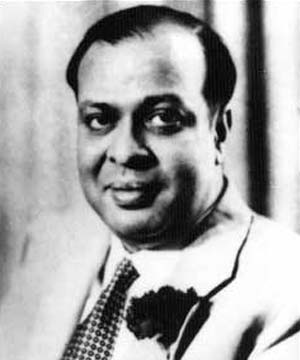
The One Unit Scheme
With the constitutional process disrupted, another solution was being developed to deal with the problem of Pakistan’s two wings.
West Pakistan was not itself a single political unit. It contained Punjab, Sindh, the North-West Frontier Province, Balochistan and a number of princely states and territories, each with its own political identity. East Pakistan, meanwhile, was a single province containing the majority of Pakistan’s population.
The One Unit Scheme, implemented in 1955, merged the provinces and princely states of western Pakistan into one administrative province called West Pakistan. The idea was to create parity between East Pakistan and West Pakistan. Instead of East Pakistan being one province facing several provinces in the west, Pakistan would now have two administrative units of equal constitutional status.
Its supporters argued that the scheme would create national unity and prevent provincial rivalries from weakening the country. The aim was to encourage people to think of themselves first as Pakistanis rather than Punjabis, Sindhis, Pashtuns, Baloch or Bengalis.
The problem was that identities do not disappear simply because an administrative boundary is removed. Many politicians in Sindh, the North-West Frontier Province and Balochistan opposed the scheme because they believed their provincial identities and political influence were being sacrificed to strengthen the central government and Punjab in particular. In East Pakistan, the scheme was also viewed with suspicion because parity meant that the larger population of East Pakistan would no longer translate directly into greater representation at the centre.
The One Unit Scheme therefore solved one constitutional problem while creating another. Pakistan had found a way to balance its two wings numerically, but it had not resolved the underlying question of how a country containing several strong regional identities could build a shared national identity.
Five-year plan revival
The government also attempted to revive the economic planning that had begun under Liaquat Ali Khan. In 1955 Pakistan introduced its First Five-Year Plan, covering the period from 1955 to 1960, with agricultural development given particular importance.
The plan aimed to increase agricultural production, develop irrigation, improve transport and communications, expand industry and raise living standards. These were ambitious objectives for a country that was still trying to establish basic administrative and economic institutions.
The problem was that Pakistan’s development needs were far greater than its available resources. The country needed investment in virtually every sector simultaneously, and political instability made long-term planning difficult. The plan therefore achieved some progress but fell well short of its ambitions.
Pakistan was beginning to learn an uncomfortable lesson. Independence had given the country control over its own future, but political independence did not automatically create economic capacity.
Iskander Ali Mirza as GG
By 1955, Ghulam Muhammad’s health had deteriorated badly. He had suffered a serious stroke and was increasingly unable to perform his duties. Iskander Mirza, who had served as Defence Secretary and had considerable influence within the civil and military establishment, became Acting Governor-General in August 1955.
Mirza quickly became one of the most powerful figures in Pakistan. He believed that politicians were incapable of providing the stability the country needed and increasingly saw himself, alongside the civil service and military leadership, as someone capable of directing Pakistan through its political difficulties.
He therefore removed Ghulam Muhammad from office and became Governor-General himself. Muhammad Ali Bogra’s position also became increasingly precarious. Mirza believed Bogra was not sufficiently effective and eventually forced him to resign as Prime Minister in August 1955.
Bogra returned to diplomacy and subsequently served as Pakistan’s ambassador to the United States. The episode demonstrated again how unstable Pakistan’s parliamentary system had become. The Prime Minister was supposed to be the central figure in the government, yet the Governor-General was increasingly able to determine who held the office.
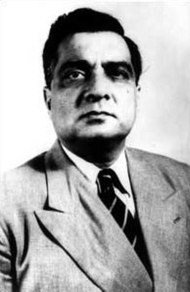
Chaudhry Muhammad Ali as PM
Chaudhry Muhammad Ali replaced Bogra as Prime Minister in August 1955. He had previously served as Finance Minister and had been deeply involved in the constitutional negotiations, so his appointment reflected the government’s desire finally to complete the constitutional process.
Muhammad Ali supported the One Unit arrangement and worked with political leaders to produce a constitution that could satisfy both wings of the country. He was also involved in planning the development of a new capital, which eventually became Islamabad, although the capital would not be officially moved there until later.
His government also attempted to improve relations with India, including discussions with Jawaharlal Nehru over Kashmir and other outstanding disputes. But the central priority remained the constitution.
After years of political disagreement, Pakistan was finally approaching the moment when it would cease operating under an adapted colonial constitutional framework and adopt a constitution of its own.
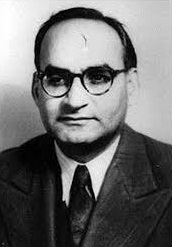
1956 Constitution
On 23 March 1956, Pakistan finally adopted its first constitution.
The country officially became the Islamic Republic of Pakistan, ending its status as a dominion under the British Crown. The constitution established a parliamentary system in which the President would serve as head of state and the Prime Minister would lead the government.
The constitution incorporated Islamic principles while also establishing a modern parliamentary state. It recognised that sovereignty belonged to Allah and required the state to enable Muslims to order their lives according to the teachings of Islam. At the same time, it guaranteed fundamental rights, religious freedom and safeguards for minorities, and established an independent judiciary.
The key features were:
- Sovereignty of Allah
- Name of the country – Islami Jamhooria Pakistan
- Muslim head of state
- Islamic principles
- Islamic way of life
- Safeguard Islamic principles
- Relation with Islamic countries
- Zakat and Awqaaf
- Minority rights
- Free judiciary
The President was required to be a Muslim, while the constitution also provided protections for non-Muslim citizens. It established a federal system, although the One Unit arrangement meant that the federation consisted essentially of East Pakistan and West Pakistan.
The constitution therefore represented an attempt to answer the question that had been debated since independence. Pakistan was to be both an Islamic state and a constitutional democracy.
The date chosen for the constitution was also significant. 23 March was already associated with the Pakistan Movement because it was the anniversary of the Lahore Resolution of 1940. Pakistan therefore deliberately connected the creation of its constitutional Islamic Republic with the political declaration that had begun the final stage of the struggle for Pakistan.
Pakistan had now become a republic, but it chose to remain within the Commonwealth. The British monarch was no longer Pakistan’s head of state, although Pakistan maintained its membership of the Commonwealth for diplomatic and economic reasons.
Chaudhry Muhammad Ali’s government, however, did not last long. His political coalition was fragile, and much of his cabinet consisted of politicians from different parties and factions. When his government lost the confidence of the National Assembly, he resigned in September 1956.
The constitution had finally been achieved.
Political stability had not.
Iskander Ali as President
With the new constitution in force, Iskander Mirza became the first President of Pakistan.
The change from Governor-General to President appeared to mark the beginning of a new constitutional era. In practice, however, Mirza continued to exercise a level of political influence that increasingly brought him into conflict with parliamentary government.
Pakistan would now experience a succession of governments, with Prime Ministers coming and going while the President remained a powerful figure behind the scenes. Between 1956 and 1958, Pakistan would have four different Prime Ministers.
This rapid turnover was not simply the result of ordinary parliamentary politics. Political parties were fragmented, coalitions were unstable and the President increasingly intervened in government formation and dismissal.
Huseyn Shaheed Suhrawardy as PM
In September 1956, Huseyn Shaheed Suhrawardy became Prime Minister after the Awami League formed a coalition with the Republican Party. Suhrawardy was one of the most important Bengali politicians of his generation and had previously served as Chief Minister of Bengal before partition.
His appointment was significant because he was a leading Bengali politician now running the government of the entire country. He recognised the growing economic and political disparity between East and West Pakistan and attempted to address it through greater investment in agriculture, food production and social development.
One of the central problems was food. East Pakistan had a huge population and suffered recurring difficulties with food production and distribution. Suhrawardy’s government attempted to improve agricultural development and food supplies, but poor infrastructure, inadequate transport and limited administrative capacity made these objectives difficult to achieve.
Suhrawardy also supported closer relations with the United States and China and continued Pakistan’s growing military relationship with the United States. American assistance included military training and equipment, which Suhrawardy believed would strengthen Pakistan against India and improve the country’s international position.
This policy was controversial in East Pakistan. Many Bengalis believed the central government was spending too much money on the military and foreign policy while failing to address the economic problems of the eastern wing. The perception that West Pakistan benefited disproportionately from the military and economic relationship with the United States contributed to the growing political divide between the two wings.
Pakistan also became increasingly involved in the Cold War. During this period, the United States was granted access to facilities in Pakistan that were used for intelligence operations against the Soviet Union. The most famous was the communications and intelligence facility at Peshawar, which became associated with American surveillance of the Soviet Union.
Suhrawardy’s government therefore continued the foreign-policy direction that had begun under Bogra, but it could not prevent the underlying political tensions inside Pakistan from growing.
President Mirza’s relationship with Suhrawardy deteriorated, and in October 1957 Suhrawardy resigned as Prime Minister.
His departure was another demonstration that Pakistan’s parliamentary system was becoming increasingly dependent on the preferences of the President rather than the strength of elected governments.
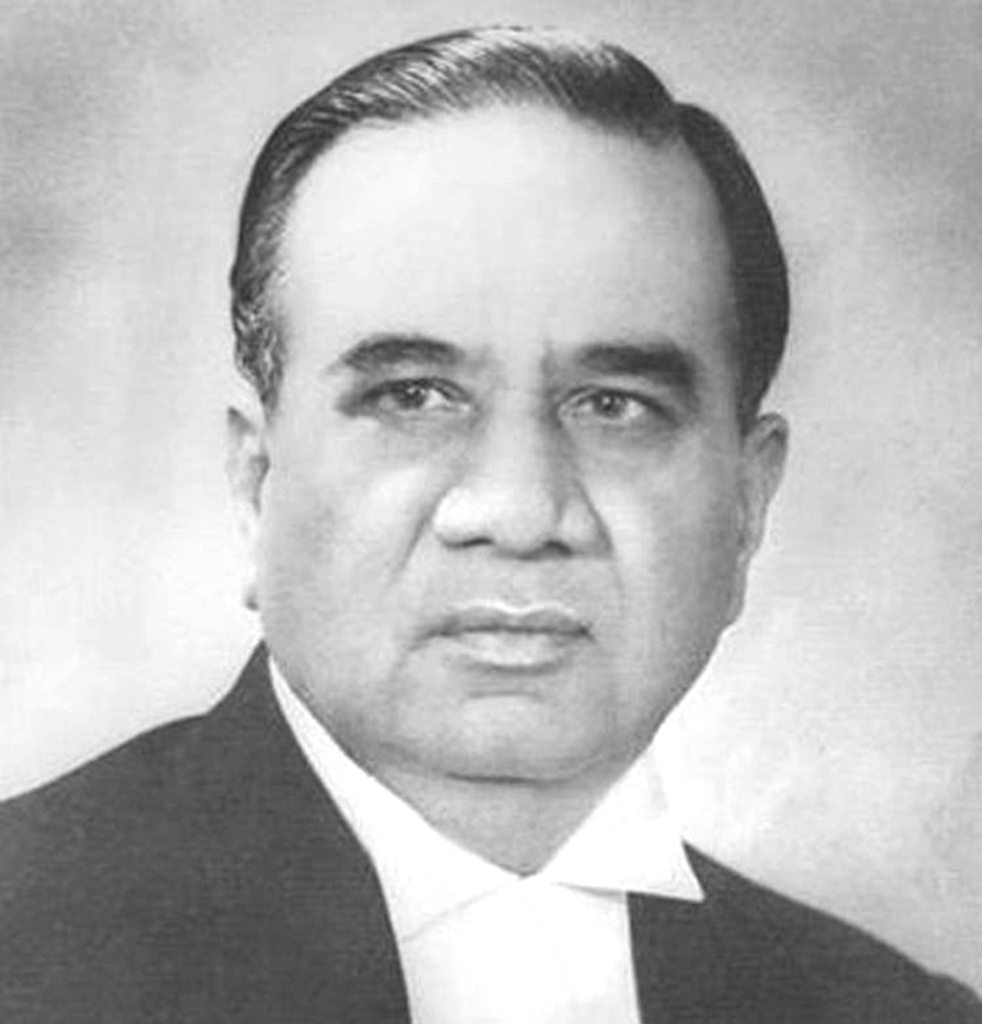
Ibrahim Ismail Chundrigar as PM
Ibrahim Ismail Chundrigar became Prime Minister in October 1957, but his government lasted only around two months.
Chundrigar attempted to reform Pakistan’s electoral system and strengthen the political position of his government, but his coalition lacked sufficient support in the National Assembly. His proposed reforms were opposed by several political groups, while President Mirza was also unwilling to provide him with the political space required to govern effectively.
Chundrigar resigned in December 1957.
Pakistan had now moved through several Prime Ministers in only a short period, while the underlying problems of constitutional instability, regional tensions and executive interference remained unresolved.
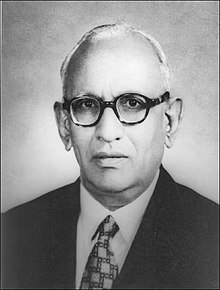
Sir Malik Feroz Khan Noon as PM
Sir Feroz Khan Noon became Prime Minister in December 1957. His appointment represented another attempt to construct a stable coalition government.
One of the most significant achievements of Noon’s government came in foreign affairs. In 1958, Pakistan reached an agreement with the Sultanate of Muscat and Oman for the transfer of Gwadar to Pakistan. Pakistan paid approximately three million US dollars for the territory, which was formally incorporated into Pakistan later that year.
Gwadar would eventually become one of Pakistan’s most strategically important locations because of its position on the Arabian Sea and proximity to the entrance of the Persian Gulf. At the time, however, it was a relatively small coastal settlement whose future significance could not yet have been fully appreciated.
Noon’s relationship with President Mirza eventually deteriorated. Mirza was preparing to retain control over the political system, while Noon was unwilling to simply become an instrument of the presidency.
In October 1958, Mirza dismissed Noon and abrogated the 1956 Constitution.
Pakistan’s short experiment with parliamentary democracy was about to come to an end.
The 1958 Coup
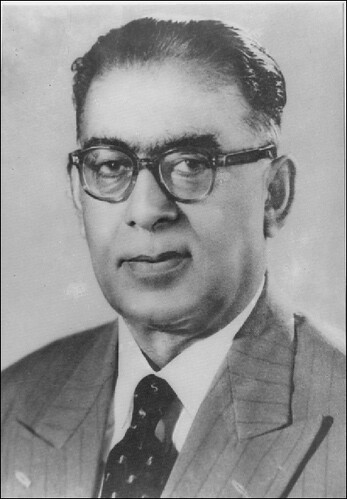
On 7 October 1958, President Iskander Mirza declared martial law, dissolved the National Assembly and provincial assemblies, abolished political parties and repealed the 1956 Constitution. He appointed General Muhammad Ayub Khan, the Commander-in-Chief of the Pakistan Army, as Chief Martial Law Administrator.
Mirza initially believed that he could use the military to restore order while retaining ultimate political authority himself. He soon discovered that this was not possible.
Ayub Khan and the military leadership had their own assessment of Pakistan’s problems. They believed that political parties had produced instability, corruption and weak government, while civilian politicians had failed to establish an effective constitutional system.
On 27 October 1958, less than three weeks after martial law had been declared, Ayub Khan removed Iskander Mirza from office and assumed the presidency himself. Mirza was sent into exile in London.
Pakistan had therefore experienced its first military takeover.
The coup was initially welcomed by many Pakistanis who were exhausted by years of political instability. Since independence, the country had lost its founder and first Prime Minister, struggled to produce a constitution, experienced repeated changes of government and witnessed serious political and sectarian unrest. Ayub Khan presented the military as an institution capable of restoring order, controlling corruption and modernising the country.
The judiciary also provided legal cover for the new regime through the doctrine that became associated with the Doctrine of Necessity, under which an extra-constitutional takeover could be justified on the basis of necessity and the preservation of the state.
The immediate political crisis had therefore been resolved, but at a considerable constitutional cost.
Pakistan had been created through a political movement that sought self-government for the Muslims of British India. Eleven years later, the country’s first constitution had been suspended and the military was now in control of the state.
This would establish a pattern that would shape Pakistan’s politics for decades to come. When civilian institutions appeared unable to manage the country’s problems, the military increasingly presented itself as the institution capable of restoring order. The question was no longer whether the army could intervene in politics.
It was whether Pakistan’s democratic institutions would ever become strong enough to prevent it.