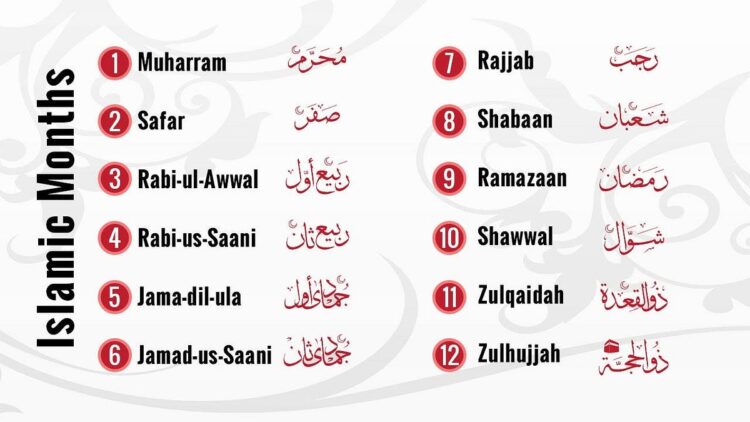
Ever wondered about the origins of the names of the months in Islam? Here’s a closer look:
Muharram
Muharram is the first month of the Islamic calendar. Historically, it was initially referred to as Safar I, with the following month known as Safar II. However, when this month was designated as sacred — meaning warfare and conflict were prohibited — it was renamed “Muharram,” which means “forbidden.” The name serves as a reminder of the sanctity and peace of this time.
Safar
The word Safar means “to travel” or “to migrate.” It was named so because, after the cessation of the sacred months, people would resume their travels for trade and other purposes. Additionally, some scholars suggest that the name Safar may also indicate the emptiness (sifr) of houses when people departed for journeys.
Rabi’ al-Awwal
Rabi’ al-Awwal means “the first spring.” The name combines Rabi’ (spring) and Al-Awwal (the first). While the exact origin of the name is unclear, it may relate to the timing of spring or a sense of renewal and joy that marked the end of the harsher seasons.
Rabi’ al-Thani
Following Rabi’ al-Awwal, this month is called Rabi’ al-Thani, meaning “the second spring.” The name likely reflects the continuation of favorable weather and agricultural productivity during this period.
Jumada al-Awwal
Jumada al-Awwal, sometimes referred to as Jumada al-Ula, derives its name from the word jamād, meaning “arid” or “frozen.” This indicates the cold and dry conditions typical of the Arabian Peninsula during this time of year.
Jumada al-Thani
Similarly, Jumada al-Thani, meaning “the second Jumada,” continues to reflect the harsh winter or dry season. The name denotes the persistence of cold and barren landscapes.
Rajab
The name Rajab comes from the Arabic root rajaba, meaning “to respect” or “to be in awe.” As one of the four sacred months in Islam, it was a time when warfare was strictly forbidden. Tribes traditionally used this time to honor peace agreements and pay respect to one another.
Sha’ban
Sha’ban is named from the word sha’ba, meaning “to disperse” or “to separate.” Historically, after the month of Rajab, people would spread out in search of water or to engage in trade. It marked a return to regular activities.
Ramadan
The most significant month in Islam, Ramadan comes from the root word ramad, meaning “intense heat.” Some scholars believe the name symbolizes the burning away of sins through fasting and spiritual devotion.
Shawwal
Shawwal is derived from the verb shāla, meaning “to lift or carry.” This month was named because female camels would typically be pregnant during this time, lifting their tails. It also marks the end of Ramadan and the joyous celebration of Eid al-Fitr.
Dhu al-Qi’dah
The name Dhu al-Qi’dah translates to “Possessor of the Sitting” or “Master of Truces.” It was a month when warfare was prohibited, encouraging people to remain at home and maintain peace. The name reflects the emphasis on rest and non-violence.
Dhu al-Hijjah
Dhu al-Hijjah means “Possessor of the Pilgrimage” or “The Month of the Pilgrimage.” It is the twelfth and final month of the Islamic calendar, during which millions of Muslims perform Hajj, the sacred pilgrimage to Mecca. The name signifies the spiritual importance of this time.
These month names not only carry historical significance but also reflect the cultural, religious, and environmental experiences of the early Arab communities.