This series will cover the history of Modern Pakistan, from the earliest notions of a separatist Muslim governance to the creation of Pakistan and all the way to 2023.
You can read post covering 1857 – 1927 here: A History of Modern Pakistan #1 1857 – 1927
1927-1939
The 1920s had begun with considerable Hindu-Muslim cooperation. Congress and the Muslim League had worked together during the Lucknow Pact, and the Khilafat and Non-Cooperation movements had brought large numbers of Hindus and Muslims onto the streets together against British rule.
But by the middle of the decade, that cooperation was beginning to break down. Communal tensions were increasing, political disagreements were becoming harder to resolve and the question of what an independent India would actually look like was becoming more important.
The British were still in control, but it was becoming increasingly clear that India would eventually need a new constitutional arrangement. The real battle was beginning to shift from simply opposing British rule to deciding what would replace it.
For Muslims, this was a particularly important question. They were a large community, but they were not the majority across India as a whole. They therefore had to decide whether their political future could be protected within a united India, and if so, what constitutional safeguards would be necessary.
Delhi Proposals 1927
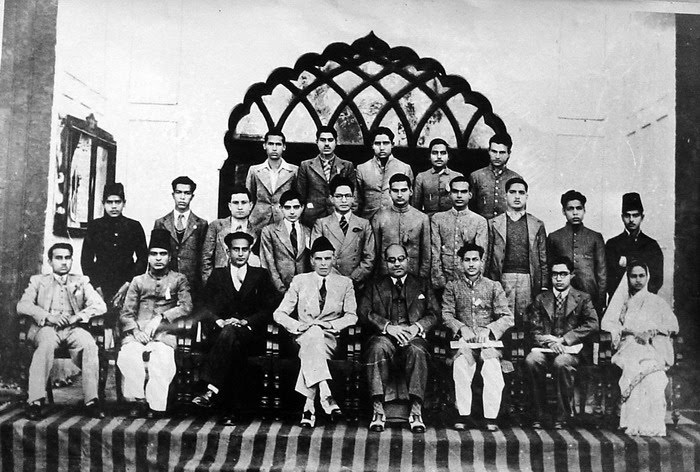
In 1927, Muhammad Ali Jinnah made another attempt to bring the Muslim League and Congress towards a constitutional agreement.
One of the biggest disagreements between the two organisations was the electoral system. Congress increasingly favoured joint electorates, where Hindus and Muslims would vote in the same constituencies and the candidate with the most votes would be elected. The Muslim League had traditionally supported separate electorates, where Muslims would elect their own representatives. The Muslim argument was that a joint electorate in a Hindu-majority constituency could allow the majority community to determine who represented the Muslim minority.
Jinnah was prepared to make a significant concession. He proposed that Muslims could give up their demand for separate electorates if a number of other safeguards were accepted. These became known as the Delhi Muslim Proposals. The proposals included separating Sind from Bombay and making it a separate province, introducing constitutional reforms in the North-West Frontier Province and British Balochistan, providing Muslim representation in Punjab and Bengal according to their population, and giving Muslims one-third of the seats in the Central Legislature.
This was a serious attempt at compromise. Jinnah was effectively saying that Muslims were willing to abandon one of their most important political demands if they could receive sufficient constitutional protection elsewhere.
Congress initially accepted the general basis of the Delhi Proposals, and the agreement helped lead to the decision to prepare a common constitutional scheme. However, the agreement did not hold together. Different sections of the Muslim League were themselves divided over the concessions, while disagreements among Congress and other political groups meant that the proposed settlement could not be turned into a lasting constitutional agreement.
The importance of the Delhi Proposals therefore lies not only in what they demanded, but in what they reveal about Jinnah’s position at the time. He was still trying to find a constitutional arrangement in which Hindus and Muslims could live in one India. He was prepared to compromise, but he wanted that compromise to provide Muslims with genuine political security.
The next attempt to settle the constitutional question would make the disagreement even clearer.
Simon Commission 1928
Simon Commission 1928
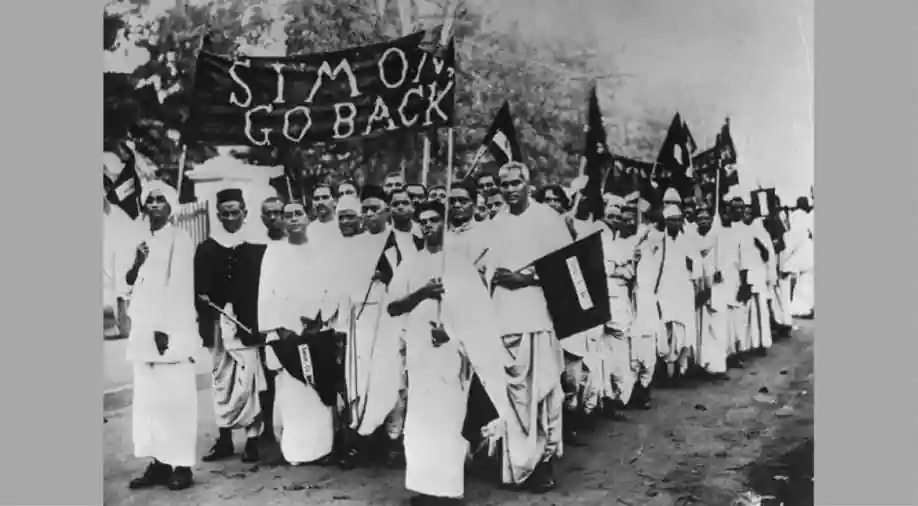
The Government of India Act 1919 had provided for a commission to review the working of the constitutional system after ten years. In 1927, the British Government appointed the Indian Statutory Commission, commonly known as the Simon Commission after its chairman, Sir John Simon.
The problem was that the commission contained no Indian members.
For Indian politicians, this was difficult to accept. Britain was sending an entirely British commission to investigate the political future of India while Indians themselves were demanding a greater role in determining their own government.
The Congress therefore boycotted the Simon Commission, and the famous slogan “Simon Go Back” became associated with the protests.
The British Secretary of State for India, Lord Birkenhead, challenged Indian political leaders to demonstrate that they could actually agree among themselves on a constitution. If Indian politicians could produce a constitutional scheme that commanded broad agreement, the challenge implied, Britain would have something concrete to consider.
Indian political leaders accepted the challenge.
An All Parties Conference was called in 1928 to attempt to produce an agreed constitution for India. It brought together representatives from a wide range of political organisations, including Congress, the Muslim League, the Hindu Mahasabha, the Sikh League and liberal political groups.
A committee was then established to prepare a constitutional report. It was chaired not by Jawaharlal Nehru, but by his father, Motilal Nehru.
The resulting document became known as the Nehru Report.
Nehru Report 1928
The Nehru Report proposed a constitutional system for a self-governing India. It contained a number of ideas that were quite advanced for the time, including fundamental rights, equality before the law, freedom of religion, parliamentary government and a federal structure.
It also proposed that there should be no state religion and that men and women should have equal rights as citizens. It envisaged a Supreme Court and proposed that provinces could eventually be organised along linguistic lines. It also recognised both Devanagari and Urdu scripts for Hindustani and allowed the continued use of English.
However, the most important issue for the Muslim League was not simply the question of religion or language. It was the distribution of political power.
The Nehru Report rejected separate electorates. It instead favoured joint electorates, with certain reservations for minorities. It also proposed a strong central government with the residuary powers, meaning powers not specifically assigned to the provinces, placed at the centre.
Summary:
- It contained a Bill of Rights.
- All power of government and all authority – legislative, executive and judicial – are derived from the people and the same shall be exercised through organisations established by, or under, and in accord with, this Constitution.
- There shall be no state religion; men and women shall have equal rights as citizens.
- There should be federal form of government with residuary powers vested in the centre.
- It included a description of the machinery of government including a proposal for the creation of a Supreme Court and a suggestion that the provinces should be linguistically determined.
- The language of the Union shall be Hindustani, which may be written either in Devanagari or Urdu character. The use of the English language shall be permitted.
For many Muslim politicians, this was a serious problem.
Muslim political leaders had spent decades arguing that Muslims needed constitutional safeguards because they were a minority in India as a whole. A powerful central government dominated by a Hindu majority could potentially leave Muslims dependent upon the goodwill of the majority.
Jinnah therefore tried once again to reach a compromise.
He proposed amendments designed to protect Muslim political interests. Among other things, he wanted Muslims to have at least one-third representation in the Central Legislature, greater provincial autonomy and safeguards for Muslim-majority provinces such as Punjab and Bengal.
These proposals were not accepted.
The constitutional negotiations had reached an important point. Jinnah had spent years trying to find a formula that would allow Hindus and Muslims to share a political system. The failure of the Nehru Report made him increasingly convinced that the two sides had fundamentally different ideas about how political power should be distributed.
In 1929, Jinnah therefore presented what became known as his Fourteen Points.
Jinnah’s Fourteen Points 1929
The Fourteen Points were effectively a Muslim constitutional response to the Nehru Report.
Jinnah responded with the ‘14 points of the Muslim league.’ Whatever the constitution, if these are not met, then Muslims will not accept.
- The form of the future constitution should be federal, with the residuary powers vested in the provinces.
- A uniform measure of autonomy shall be granted to all provinces.
- All legislatures in the country and other elected bodies shall be constituted on the definite principle of adequate and effective representation of minorities in every province without reducing the majority in any province to minority or even equality.
- In the Central Legislature, Muslim representation shall not be less than one-third
- Representation of communal groups shall continue to be by separate electorates: provided that it shall be open to any community, at any time, to abandon its separate electorate in favour of joint electorate.
- Any territorial distribution that might at any time be necessary shall not in any way affect the Muslim majority in Punjab, Bengal, and NWFP provinces.
- Full religious liberty shall be guaranteed to all communities.
- One-third representation shall be given to Muslims in both central and provincial cabinets.
- No bill or resolution shall be passed in any legislature if three-fourths of the members of any community in that body oppose the bill.
- Sindh should be separated from Bombay to a province.
- Reforms should be introduced in the NWFP and Balochistan on the same footings as in the other provinces.
- Muslims should be given an adequate share in all services, having due regard to the requirement of efficiency.
- The Constitution should embody adequate safeguards for the protection of Muslim culture, education, language, religion, and personal laws, as well as for Muslim charitable institutions.
- No change will be made in the constitution without the consent of the province.
Jinnah was not yet presenting a demand for Pakistan. He was setting out the conditions under which Muslims could accept a future Indian constitution.
The first demand was that India should have a federal constitution, with the residuary powers belonging to the provinces rather than the central government. This was particularly important because strong provincial governments would allow Muslim-majority provinces to retain substantial political control.
Jinnah also demanded that all provinces should receive the same degree of autonomy and that Muslim-majority provinces should not have their majorities weakened through future territorial changes.
He wanted adequate and effective representation for minorities, while ensuring that a Muslim majority in provinces such as Punjab and Bengal could not simply be reduced to minority status through constitutional arrangements.
At the centre, Muslim representation was to be at least one-third.
Jinnah also wanted separate electorates to continue, although he explicitly allowed any community to abandon separate electorates if it later wished to adopt a joint system. Religious freedom was to be guaranteed, and Muslims were to receive an adequate share of government services.
He demanded constitutional safeguards for Muslim religion, culture, education, language, personal law and charitable institutions. Sind was again to be separated from Bombay, while constitutional reforms were to be introduced in the North-West Frontier Province and Balochistan.
Finally, Jinnah wanted constitutional changes affecting the provinces to require their consent.
The Fourteen Points were therefore not a declaration of independence. They were a detailed attempt to establish the conditions under which Muslims could participate in a united India without becoming politically powerless.
But the political relationship between Congress and the Muslim League had changed.
Jinnah had once been described as an ambassador of Hindu-Muslim unity. Now he was increasingly convinced that Congress was unwilling to accept the constitutional safeguards that Muslims considered necessary.
The failure of the constitutional negotiations would have consequences far beyond the 1920s.
Allahabad Address 1930
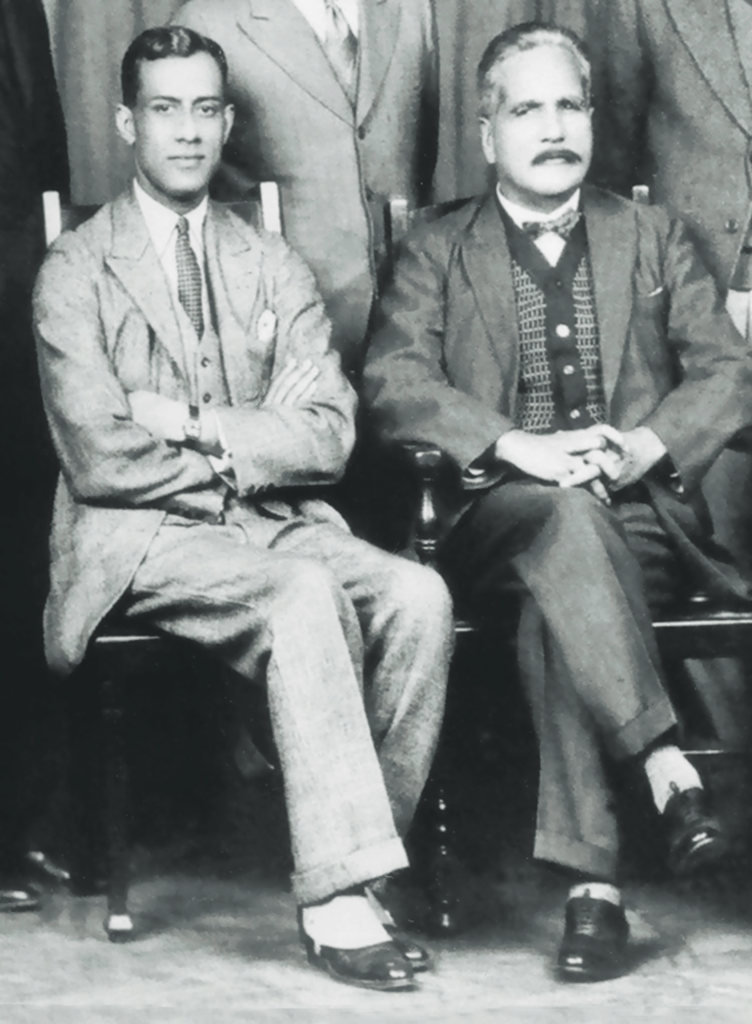
In December 1930, Allama Muhammad Iqbal delivered his presidential address to the annual session of the All-India Muslim League at Allahabad.
Iqbal was already one of the most influential Muslim thinkers in South Asia. He was primarily known as a poet and philosopher, but his ideas increasingly became political.
In his Allahabad Address, he argued that the Muslim-majority areas of north-western India should be brought together into a consolidated Muslim political unit. He specifically referred to Punjab, the North-West Frontier Province, Sind and Balochistan.
Iqbal described the creation of a consolidated North-West Indian Muslim state as the “final destiny” of Muslims in north-west India, while also discussing the possibility of such a state existing within or outside the British Empire.
This is one of the most important moments in the development of the idea that eventually became Pakistan.
However, it is important not to read the Pakistan of 1947 backwards into Iqbal’s speech.
Iqbal did not set out the complete Pakistan plan that would later be adopted by the Muslim League. His proposal was concerned with giving Muslim-majority areas political autonomy and creating a political structure in which Muslims could develop their collective identity and social order.
Historians have therefore debated exactly what Iqbal intended. Some have treated the Allahabad Address as the intellectual foundation of Pakistan, while others have argued that Iqbal was proposing a Muslim autonomous unit within a wider Indian federation rather than an entirely separate sovereign country.
Either way, something important had changed.
The discussion was no longer only about protecting Muslims as a minority.
There was now a serious argument that Muslims should have political control over the areas in which they formed a majority.
Round Table Conferences
While these debates were taking place in India, the British Government was trying to find a constitutional solution of its own.
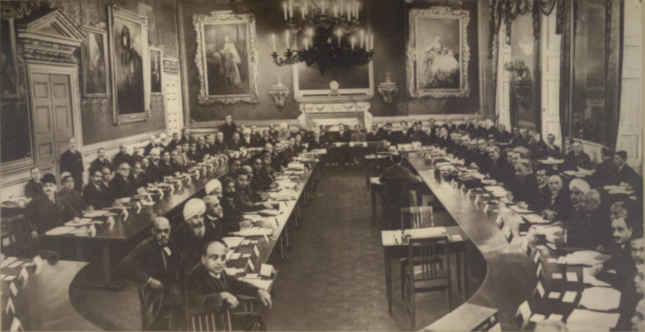
Between 1930 and 1932, three Round Table Conferences were held in London to discuss the future government of India.
The conferences brought together British politicians, Indian political leaders, representatives of the princely states and representatives of different religious and social communities. Their purpose was to work towards a new constitutional arrangement for India.
The First Round Table Conference began in November 1930. Congress did not attend because Gandhi and other Congress leaders were involved in the Civil Disobedience Movement and many had been imprisoned. Jinnah, however, was among the Indian political representatives who participated.
The conference discussed the possibility of an all-India federation that would bring together British India and the princely states. It also dealt extensively with the question of minority safeguards.
The absence of Congress meant that the first conference could not produce a final settlement. The British recognised that any lasting constitutional arrangement would need Congress to participate.
The Second Round Table Conference was therefore held in 1931 after the Gandhi-Irwin Pact. Gandhi attended as the sole representative of Congress.
But the conference quickly ran into the same fundamental problem that had troubled Indian politics for years.
Who could speak for India’s Muslims, Sikhs, Dalits and other minorities, and what safeguards would they receive in a future democratic system?
Gandhi claimed to represent India as a whole, while other political leaders rejected the idea that Congress could automatically speak for every community.
The discussions again failed to produce an agreement.
The Third Round Table Conference took place in 1932, but Congress again did not participate. The conferences nevertheless influenced the constitutional reforms that eventually became the Government of India Act 1935.
The constitutional problem had still not been solved.
The British had tried to find a way forward.
Congress wanted self-government.
Muslim leaders wanted safeguards.
The princes wanted to protect their states.
Sikhs and other minorities wanted their own political protections.
Everyone was discussing the future of India, but they were increasingly struggling to agree on what that future should look like.

The Communal Award 1932
The British Government eventually intervened directly in the question of minority representation.
In 1932, Prime Minister Ramsay MacDonald announced the Communal Award.
It maintained separate electorates for Muslims and extended separate representation to a number of other communities and groups. The decision was controversial, with Congress opposing aspects of the system while many minority groups viewed separate representation as an important safeguard.
For Muslims, however, separate electorates remained a central part of the constitutional protection they had demanded for decades.
The constitutional debate was therefore continuing, but the British were now moving towards a new system of provincial government.
Land of the Pure
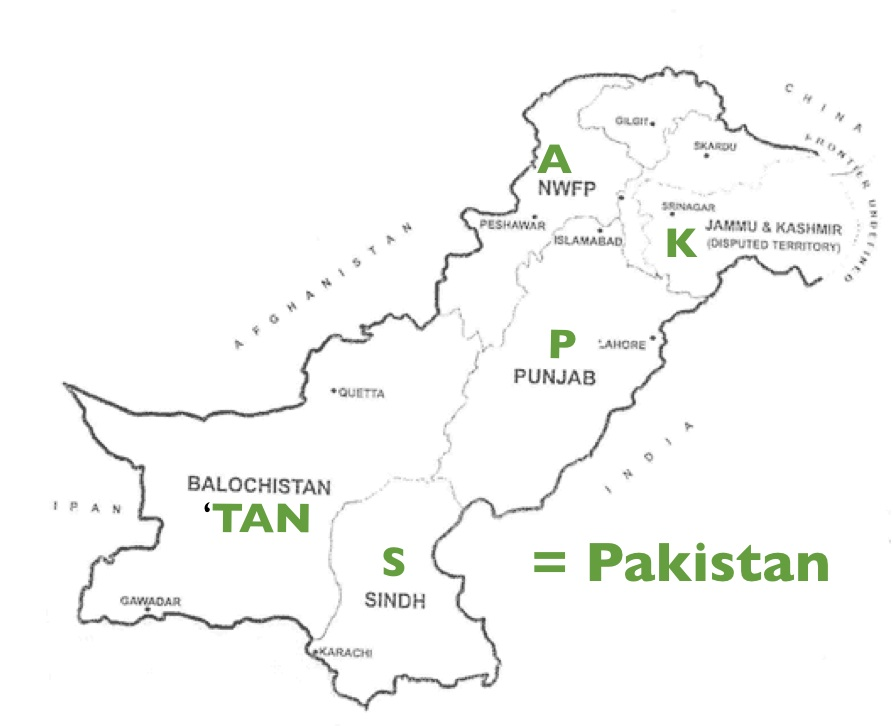
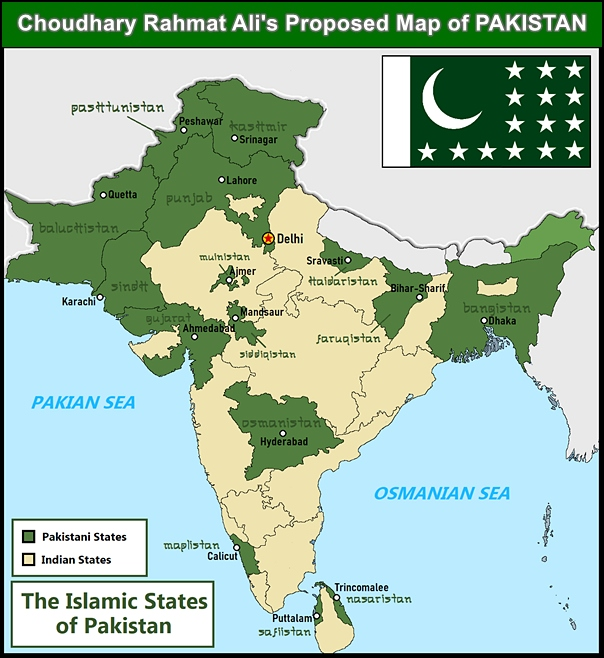
In 1933, Choudhry Rahmat Ali produced a pamphlet, entitled Now or Never, in which the term Pakistan, ‘land of the pure,’ comprising the Punjab, North West Frontier Province (Afghania), Kashmir, Sindh, and Balochistan, was coined for the first time.
In 1933, a young Muslim student at Cambridge named Choudhry Rahmat Ali published a pamphlet entitled Now or Never, Are We to Live or Perish Forever?
It was in this pamphlet that the name Pakistan was famously put forward for a Muslim homeland in north-western India.
Rahmat Ali used the name to refer to the Muslim homelands of Punjab, Afghania, Kashmir, Sindh and Balochistan. The name was constructed from parts of these names and also carried the meaning associated with the Persian and Urdu word pak, meaning pure.
Rahmat Ali’s vision was much more radical than the constitutional demands that Jinnah had been making.
He was not simply asking for safeguards within a united India.
He was proposing separate Muslim homelands.
It is important, however, to understand that Rahmat Ali’s proposal was not yet the official policy of the Muslim League. Jinnah did not simply take Rahmat Ali’s proposal and adopt it. The political movement that eventually created Pakistan would develop through a different process over the following decade.
Nevertheless, the word had now entered political vocabulary.
Pakistan had a name.
The question was whether it would ever become a country.
Government of India Act 1935
After years of constitutional discussions, the British Parliament passed the Government of India Act 1935.
It was one of the most extensive constitutional measures introduced during British rule.
The Act proposed a federal system involving British India and the princely states, although the all-India federation was never fully implemented. More importantly, it introduced provincial autonomy and greatly expanded the powers of elected Indian politicians within the provinces.
The British still retained important powers, but the political experiment was moving much closer to representative government.
The next test would be the elections.
For the first time, Indian political parties would have to demonstrate how much support they actually had among the population.
The result would have a profound effect on the Muslim League.
1937 elections
Elections were held in 1937 under the new constitutional arrangements.
Congress performed extremely well, winning 706 of approximately 1,586 provincial assembly seats and eventually forming ministries in several provinces. The Muslim League, by contrast, performed much less strongly than Jinnah had hoped. It won only a minority of the Muslim-reserved seats, with many Muslim seats being won by regional Muslim parties and independent candidates instead.
This is an important point that is sometimes lost in simplified accounts of the Pakistan movement.
In 1937, the Muslim League did not yet represent all Indian Muslims.
In provinces such as Punjab and Bengal, regional Muslim political organisations were much stronger. The League’s weakness in the elections forced Jinnah to confront a serious problem. If the Muslim League was going to negotiate the future of India on behalf of Muslims, it first had to become the organisation that Muslims themselves actually followed.
Congress’s success also changed the political atmosphere.
Congress formed governments in provinces including the United Provinces, Bihar, Bombay, Madras and the Central Provinces. For Congress supporters, this was evidence that they could govern India. For many Muslims, however, the Congress ministries became an important test of what Hindu-majority political rule might look like.
Muslim League leaders began collecting complaints about the Congress ministries. Some complaints concerned the promotion of Hindi and the treatment of Urdu, the use of the Bande Mataram song, educational policy, representation in government and the treatment of Muslim religious and cultural practices.
Some of the allegations that later appeared in political literature have been exaggerated, so they need to be treated carefully. For example, it is not accurate to say that Congress governments simply banned the Azan or imposed a universal ban on cow slaughter throughout the provinces. Nor was there a general legal requirement across Congress-ruled India that every student recite Bande Mataram in the form sometimes described in later political accounts.
There were, however, genuine disputes over these issues, and Muslim political leaders regarded them as evidence that Congress’s claim to represent all Indians could not simply be accepted without question.
The Bande Mataram controversy was particularly sensitive because parts of the song were considered objectionable by Muslims due to their religious imagery. Congress eventually attempted to address the issue by distinguishing between the acceptable and objectionable portions, but the controversy remained politically significant.
Language was another major issue. In parts of northern India, Muslim leaders feared that the promotion of Hindi at the expense of Urdu would gradually weaken Muslim cultural identity. The question was not simply which language people spoke in their homes. It had become connected to education, government employment, literature and the cultural future of the Muslim community.
Educational policy also became controversial. The Wardha Scheme, developed in 1937, proposed a new system of basic education, and the Vidya Mandir scheme in the Central Provinces became particularly controversial among Muslims. Muslim League critics argued that some of the educational policies reflected the cultural assumptions of the Hindu majority rather than a genuinely neutral national education system.
The Congress ministries lasted for only a few years, but their political impact was much greater.
For Jinnah, the experience provided an opportunity to argue that the issue was not simply whether Britain should leave India.
The issue was what would happen to Muslims when Britain did leave.
If Congress could form governments with a large Hindu political base while claiming to represent the whole of India, what guarantee did Muslims have that a future central government dominated by Congress would protect Muslim political, religious and cultural interests?
This became one of the most powerful arguments of the Muslim League.
The 1937 elections therefore became a turning point.
Jinnah had previously spent years trying to negotiate constitutional safeguards with Congress.
Now he increasingly focused on building the Muslim League into a mass political organisation capable of speaking for Indian Muslims.
The League would spend the next few years doing exactly that.
Madani–Iqbal debate 1938
The Muslim response to the future of India was not unanimous.
This is important because there was never a single Muslim position on whether India should be divided.
One of the most interesting debates took place between two major Muslim thinkers, Maulana Hussain Ahmad Madani and Allama Muhammad Iqbal.
Madani, a senior scholar of Deoband and a leading figure in the Jamiat Ulema-e-Hind, supported the idea of composite nationalism. He argued that Muslims and non-Muslims living in the same territory could form one political nation while remaining distinct religious communities.
For Madani, Islam did not require Muslims to reject cooperation with non-Muslims in a shared political homeland. He believed that British rule was the greater political danger and that Indians needed to work together to achieve independence.
His position was later developed in his 1938 work Muttahida Qaumiyat aur Islam, or Composite Nationalism and Islam, in which he argued that the people of India could constitute one political nation despite their religious differences.
Iqbal took a very different view of nationalism.
For Iqbal, Islam was not merely a private religion that could be separated from the political and social life of Muslims. He believed that Muslims possessed a distinct religious and cultural identity and needed a political environment in which that identity could develop.
His Allahabad Address had already called for the consolidation of the Muslim-majority areas of north-western India. His disagreement with Madani therefore went deeper than simply the question of whether India should be independent from Britain.
It concerned the meaning of nationhood itself.
Could Muslims remain a distinct millat while sharing one political nation with non-Muslims?
Madani believed they could.
Iqbal was far more sceptical of territorial nationalism and believed that Muslim political consciousness had to be preserved and strengthened.
The debate is important because it shows that even among the religious scholars and intellectuals of the time, there was no single agreed path towards the future.
Some Muslims supported a united India.
Some wanted a united India with strong constitutional safeguards.
Some increasingly supported Muslim autonomy.
And others were beginning to think in terms of a separate Muslim homeland.
The idea of Pakistan was therefore still developing.
What had changed by the end of the 1930s was that the political question had become much sharper.
The issue was no longer simply whether Muslims could obtain a few reserved seats or constitutional protections.
The deeper question was whether Muslims constituted a political nation whose future required its own political power.
By 1939, the Muslim League was moving towards a much more assertive position, while Congress and the League were becoming increasingly distant from one another.
The events of the next few years would transform the political landscape completely.
Within a decade, the question that had once been about minority safeguards would become a demand for a separate country.
Read next: A History of Modern Pakistan #3, 1939–1947